Tag: Oswald Passport

  • The Oswald Passport Application That Was Never Logged

    The Oswald Passport Application That Was Never Logged

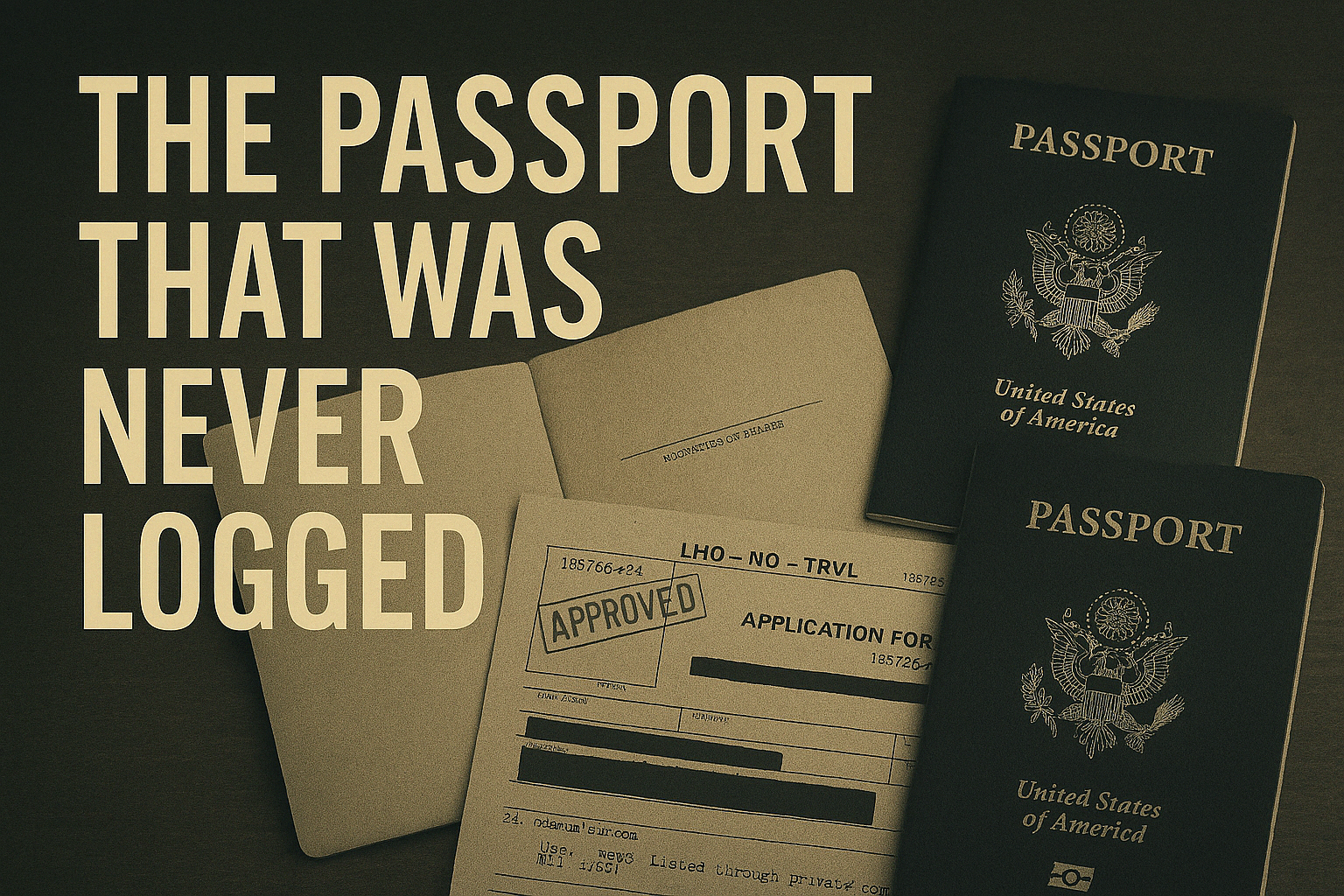
    One of the most overlooked documents in the 2025 files is a blank passport application found in Oswald’s New Orleans file - stamped approved with no signature and no travel record. The destination was redacted. The date was October 1963.


    🧾 A Passport With No Owner

    The newly declassified FBI file titled “LHO–NO–TRVL” includes a photocopy of an unsigned passport application with an approval stamp dated October 3, 1963 - the same week Oswald was allegedly preparing his trip to Mexico.

    The problem? His official passport had already been issued two years earlier.

    This one had a different ID number.

    No photo attached.

    And no record of cancellation.


    📍 The Redacted Destination

    The most heavily blacked-out portion of the document is the destination box. But a routing slip attached to the file lists one legible keyword: “Caracas.”

    Why would Oswald - or someone using his identity - have a travel document approved to Venezuela just weeks before the assassination?

    And why wasn’t it logged by State?


    🗃️ Internal Alarm That Went Nowhere

    A 1964 interoffice CIA memo now made public refers to the passport as “unauthorized parallel documentation.”

    Another line states:

    “Appears to have been issued through private contact within Agency field team.”

    The note ends with:

    “Item not helpful to Commission proceedings. File separate.”

    Translation: it was real, it was flagged, and it was suppressed.


    🕴️ False Identity Or Quiet Extraction?

    The CIA memo raises one final, chilling theory - handwritten in the margins:

    “Check MEX-CUB asset crossover. Possible double op.”

    It’s the only surviving note linking the rogue passport to the possibility of a second Oswald - or a planned exit route that never came.


    📦 The Paper Trail Led Out Of Dallas

    The official record shows Oswald never left the country after Mexico City.

    This document suggests someone planned for him to.

    Or for someone else using his name.

    And in 1963, that was enough to get a passport.
  • The Memo That Wanted the Oswald File Closed Fast

    The Memo That Wanted the Oswald File Closed Fast

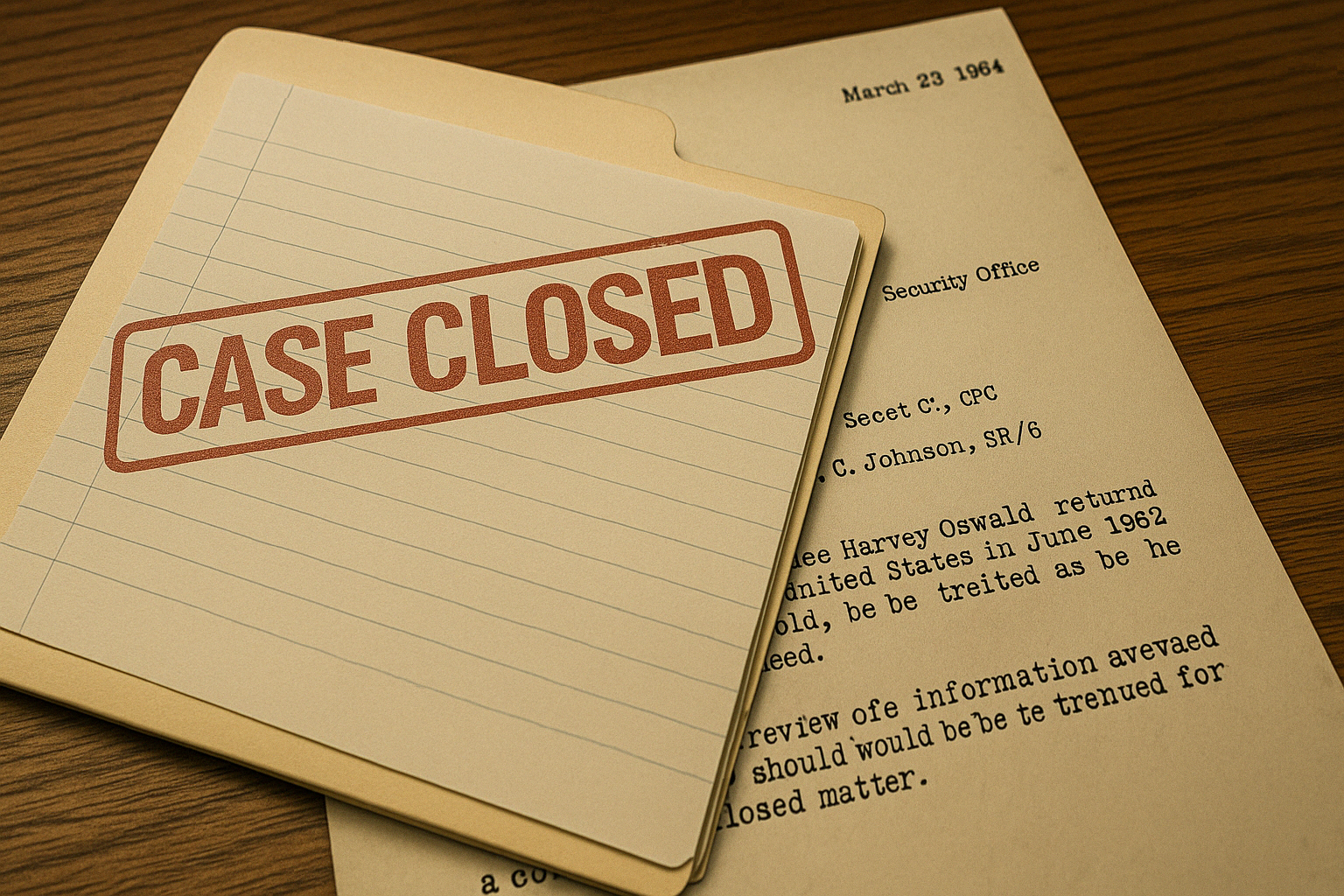
    In document 194-10012-10400, released as part of the 2025 JFK files, a mid-level U.S. official expresses clear frustration over lingering attention to Lee Harvey Oswald’s passport and embassy file.

    The request is simple: close it, bury it, and move on.

    But the date-March 1964-makes the urgency seem like something more than just bureaucratic cleanup.


    📁 “This Should Be Treated as a Closed Matter”

    The memo, sent between officials in the State Department’s Security Office, discusses the ongoing interest in Lee Harvey Oswald’s case-particularly his Soviet defection, passport reinstatement, and his reentry into the U.S.

    At a moment when the Warren Commission was still taking testimony, the Department was already recommending a full administrative shutdown of Oswald’s consular records.

    “In view of the information presently available… there would appear to be no further need for action by this office. This should be treated as a closed matter.”

    There’s no recommendation for follow-up. No effort to clarify the many open questions surrounding how Oswald got a new passport in 1961, just months after threatening to defect to the USSR.


    🧹 A Push for Institutional Amnesia

    While the memo doesn’t directly call for destruction of records, its intent is unmistakable: tie off the loose ends and move on. The official appears more concerned with clearing paperwork than with aiding an active investigation.

    And the phrase “based on information presently available” stands out. It acknowledges a lack of certainty-but still leans toward silence.

    It’s not a cover-up. It’s clearance by exhaustion.


    📆 March 1964-Far Too Early for Closure

    This memo was written just four months after Kennedy was assassinated-and months before the Warren Commission would publish its final report.

    The idea that any office within the U.S. government felt ready to “close” the Oswald case so soon raises serious concerns. At that point, multiple questions remained unanswered:

    • Who approved his passport renewal?
    • Was he interviewed upon return?
    • Were other agencies consulted?

    None of those issues are addressed. The memo simply expresses relief that the file can be put to rest.


    🚪 A Door the State Department Couldn’t Wait to Close

    By urging administrative closure of the file, the memo reveals what some agencies wanted in 1964: a fast end to their involvement.

    The assassination had thrown light into too many corners of Cold War bureaucracy, and this memo reads like a quiet attempt to turn the lights back off.


    🧩 Not a Smoking Gun-But a Clear Signal

    This memo doesn’t implicate anyone. But it does illustrate a mindset shared across Washington: Oswald was a problem best left behind.

    The full truth might have been inconvenient, embarrassing, or difficult to explain.

    So instead of pursuing it further, this official did what bureaucracy does best.

    He filed it away-and asked never to look at it again.